
Kitchen trends have a habit of circling back around, though rarely in the same form.
A decade ago, glossy surfaces and ultra-minimal finishes dominated showroom displays. Everything looked polished, uniform and almost clinically pristine. More recently, though, there’s been a noticeable shift towards materials that feel tactile, grounded and slightly imperfect in a good way.
That’s partly why slate worktops are appearing in more renovation projects again.
Not as a nostalgic throwback, necessarily. More as part of a broader move towards kitchens that feel lived-in rather than staged for photographs.
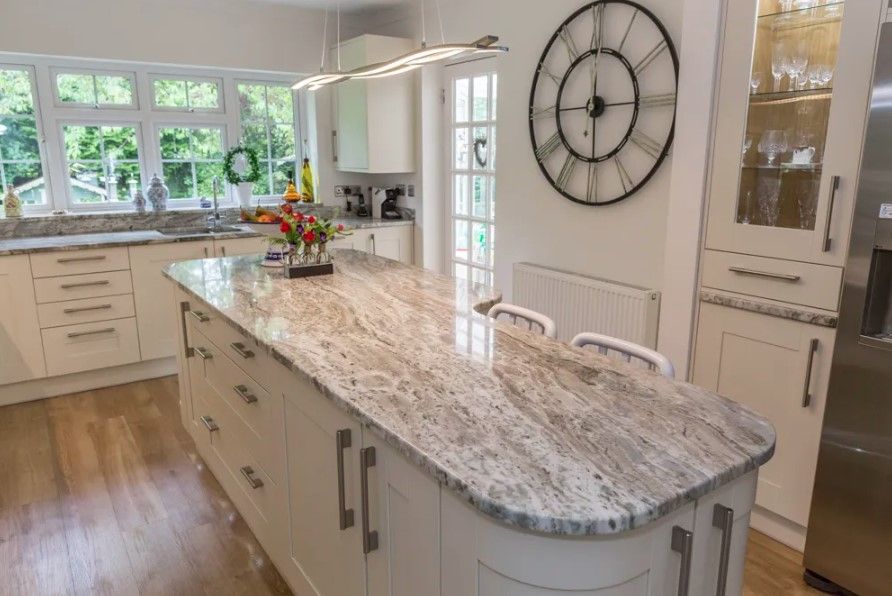
Slate has a quieter presence than marble or heavily patterned granite. It doesn’t demand attention the moment you walk into a room. Yet that subtlety is precisely what many homeowners now seem to value.
There’s depth to it. Texture. Variation.
And unlike some trend-led surfaces, it tends to age rather gracefully.
Why Slate Worktops Appeal to Modern Homeowners
Part of slate’s appeal comes from its honesty as a material.
It looks natural because it is natural. The layered texture, tonal variation and slightly uneven character are difficult to replicate convincingly with manufactured alternatives.
For homeowners growing tired of overly polished interiors, that matters.
Modern kitchens increasingly lean towards softer, more organic aesthetics:
- muted cabinetry,
- warm timber,
- brushed metals,
- and natural stone surfaces that don’t look excessively processed.
Slate fits comfortably into that environment.
It also works surprisingly well across different property styles. In period homes, it can complement original architectural details without feeling forced. In newer properties, darker slate surfaces often add depth and contrast to cleaner contemporary spaces.
The versatility catches people off guard sometimes.
The Difference Between Slate and Other Natural Stone Surfaces
People often group natural stone worktops, though the materials behave quite differently in practice.
Marble, for instance, is admired for its veining and softness but can mark fairly easily in busy kitchens. Granite is extremely durable, but sometimes appears visually heavy depending on the finish.
Slate sits somewhere in between.
It’s generally denser and less porous than many people expect, especially when properly sealed. It also has a softer visual texture than highly reflective stone surfaces.
That muted appearance is part of the attraction.
Rather than becoming the dominant feature of a kitchen, slate tends to support the wider design quietly. It allows cabinetry, lighting and architectural details to breathe a little.
There’s also a practical advantage in how forgiving it can appear day to day. Fingerprints, crumbs and minor water marks are often less obvious on textured slate than on polished composite surfaces.
Anyone who actually cooks regularly tends to appreciate that fairly quickly.
Texture, Colour and Character in Contemporary Kitchens
One reason slate worktops are returning to favour is that homeowners seem increasingly comfortable with materials showing natural inconsistency.
For years, kitchen design leaned heavily towards perfection:
- flawless finishes,
- identical patterns,
- mirror-like surfaces.
Now there’s growing appreciation for variation.
Natural slate often includes subtle tonal shifts ranging from charcoal and graphite through to softer grey-blue undertones. Some slabs contain faint mineral markings or layered textures that become more noticeable in changing light throughout the day.
That evolving appearance gives kitchens a little more warmth.
Interestingly, designers are also pairing slate with materials that previously may have felt too contrasting:
- limewashed wood,
- aged brass,
- handmade tiles,
- and softer painted cabinetry colours.
The result tends to feel calmer and more personal than the ultra-uniform kitchens that dominated social media a few years ago.
The Practical Side of Living With Slate Worktops
Aesthetics aside, practicality still matters enormously in kitchen design.
Worktops absorb daily wear more than almost any other surface in the home. Hot pans, spills, chopping, and cleaning products — kitchens place constant demands on materials.
Slate generally performs well under normal household use, though like all natural stone, it benefits from sensible maintenance.
Proper sealing helps protect against staining and moisture absorption. Most homeowners find upkeep relatively straightforward once the surface has been installed correctly.
One thing people often notice is how slate feels less “showroom delicate” than some premium surfaces. There’s less anxiety around using it normally.
That psychological difference matters more than design magazines sometimes acknowledge.
A kitchen that people feel comfortable using tends to become a better living space overall.
Where Slate Works Best in the Home
Although kitchens remain the obvious setting, slate works particularly well in other areas too.
Utility rooms benefit from their durability and understated appearance. Boot rooms and pantry spaces often suit darker textured surfaces because they hide daily wear more naturally.
Some homeowners also extend slate into:
- bathroom vanities,
- fireplace surrounds,
- shelving,
- or outdoor kitchen spaces.
Its versatility comes partly from the fact that it rarely feels overly decorative.
It simply settles into a room comfortably.
That said, choosing the right stone still matters enormously. Not all slate performs equally, and some homeowners eventually decide they prefer alternatives with different visual movement or durability characteristics.
For those comparing materials, browsing natural stone collections such as these quartzite surface options can be useful for understanding how different stones behave aesthetically within modern interiors. Quartzite, in particular, appeals to homeowners wanting more dramatic natural patterning while retaining strong durability.
Often, the decision comes down to how quietly - or boldly - someone wants the worktop to shape the room.
Why Natural Materials Are Replacing Perfect Finishes
There’s a broader cultural shift happening around interiors generally.
Homes are becoming less performative.
People seem increasingly drawn towards materials that feel authentic rather than excessively polished for online presentation. Texture has returned. So has individuality.
Slate worktops fit naturally into that movement because they resist looking manufactured.
Even subtle imperfections become part of the appeal:
- small mineral variations,
- layered textures,
- softened edges over time.
These details help kitchens feel more settled and less temporary.
Interestingly, this mirrors what’s happening elsewhere in design too. Timber flooring with knots and grain variation is preferred over perfectly uniform boards. Handmade tiles remain popular precisely because no two are identical.
There’s comfort in materials that feel real.
Choosing the Right Stone for Long-Term Use
One of the more sensible questions homeowners can ask before choosing any worktop material is surprisingly simple:
“How will this look after five years of ordinary use?”
Not under showroom lighting. Not immediately after installation. During real daily life.
That perspective often changes decisions.
Highly polished surfaces can appear impressive initially, but become stressful to maintain. Trend-led finishes may date surprisingly quickly. Extremely uniform materials sometimes lose warmth over time.
Slate tends to avoid some of those problems because its character already includes natural variation and texture from the outset.
It doesn’t rely on perfection to look good.
That usually gives it greater longevity aesthetically, particularly in homes designed around comfort rather than constant visual impact.
Final Thoughts
Slate worktops may never dominate kitchen trends in the way quartz or marble occasionally have, but that’s arguably part of their strength.
They offer something quieter:
- texture,
- depth,
- practicality,
- and a sense of permanence that suits how many people now want their homes to feel.
For homeowners looking beyond short-term trends, slate continues to make a compelling case — not because it shouts for attention, but because it settles naturally into everyday life and tends to improve with use.
That’s difficult to manufacture artificially.
And perhaps that’s why slate worktops are finding their way back into modern kitchens once again.
FAQs
Are slate worktops durable?
Yes, slate is generally considered a durable natural stone suitable for kitchens, particularly when sealed and maintained correctly.
Do slate worktops stain easily?
Properly sealed slate is relatively resistant to staining, though, like most natural stone surfaces, spills should still be cleaned promptly.
Are slate worktops expensive?
Pricing varies depending on the quality, thickness and sourcing of the stone. Slate often sits within the mid-to-premium range of natural worktop materials.
Do slate worktops scratch?
Slate is fairly durable, though scratches can still occur with heavy use or sharp objects. Many minor marks tend to blend naturally into the textured surface over time.
Are slate worktops still fashionable?
Rather than being trend-driven, slate worktops are increasingly appreciated for their timeless, understated appearance and natural character.